How Theatre Cruising Operates as Performance Spaces
Cruise ships have the capability of hosting theatre-based events due to their built-in performance venues. Many ships have purpose-designed theatres, adaptable lounges and open deck areas that can be used for different types of productions. These spaces allow organisers to present large scale shows and smaller, more intimate shows throughout the voyage.
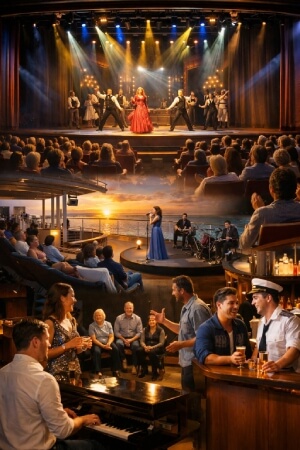
Unlike traditional theatres where shows are fixed to one location, cruise ships provide multiple venues within a compact space. This makes it possible to schedule overlapping events and provide audiences with choices of performances. Guests may move easily between spaces, providing a flexible and varied experience.
Programming is typically structured across several days. Productions will be repeated to provide all guests the opportunity to attend, while additional sessions provide insight into the creative process. Performers may also engage directly with audiences through informal events, enhancing the overall experience. This is basically how it works:
- Cruise ships typically have their own theatres with all the technical capabilities (lighting, sound, sets) needed to put on a production.
- Performance venues will allow an organizer to host a variety of productions of different sizes aboard the cruise.
- Audiences have a chance to see productions multiple times due to repeated performances.
- Guests are able to participate in workshops and/or discussions about the rehearsal process, acting technique, and the design process of building a stage.
- The shared space provides the opportunity for both the performers and the audience to interact outside of scheduled productions.
This structure creates a cruise that is capable of serving as both a venue for the performing arts and as a cultural area where the audience's interest goes beyond just watching the show.
Music Theatre Voyages & Onboard Programs
Music theatre cruises combine music concerts with stage productions. They could contain musical theater pieces, a live band performing, and thematic events. The goal is to create a varied schedule of theatrical entertainment options.
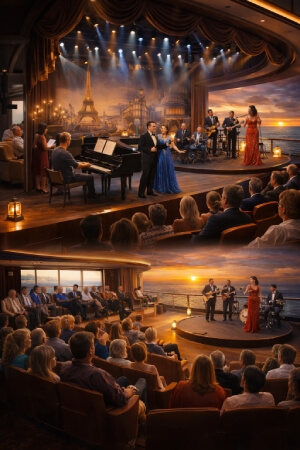
Onboard programming typically includes day-time and night-time programs. During the day, there may be small performances, rehearsals, and educational programming. Guests may be able to watch a workshop about singing, listen to a reading of a play, or learn about the development of a production. These sessions provide a detailed look at what it takes to produce a performance.
In the evenings, onboard programming typically features larger productions and headlining acts. Many of these larger productions occur in the main theatre on the ship and may include large-scale musical productions or concert-style performances. The atmosphere is typically more formal during these types of productions. The focus is placed on the presentation and experience of the audience.
Music theatre cruises will typically have a structured schedule of performances that allows for guests to have downtime to relax. Guests are able to decide how much of the program they would like to attend. This provides each guest with a customized experience while still being part of the overall program for the cruise. So, best put:
- Daytime shows are typically smaller performances including rehearsals, workshops, etc. which help create the artistic process.
- Evening performances will be full-scale productions like musicals or live concert performances.
- There could also be themed events that take advantage of some style or genre in both music and theater.
- The cruise line can allow for flexible scheduling allowing attendees to see several performances without too much time in between.
- With music and theater combined, the cruise line is able to provide a diverse schedule to appeal to many different types of attendees.
Theatre cruises have evolved over the years and continue to grow into the cruise-based festival market. They are using a combination of structured programming along with the unique experience of being at sea to create a new way to enjoy live performances, yet still maintain a focus on live stage production.
Quick Links
Celebrity Cruises Reveals Four New European-Inspired Festivals On Celebrity XCEL https://t.co/x0VUiXkSul #cruise #voyage #travel #adventure pic.twitter.com/RyJPuGCvjx
— Luxury Lifestyle (@luxurylifestyle) January 23, 2026